Sunday, March 30, 2008


Monday, February 18, 2008

Phyllis Whitney

One of the most famous children's authors, Phyllis A. Whitney, died on February 8th. She was known as "the queen of American Gothics." Local columnist and "mystery" expert, Oline Cogdill, wrote about her in the Sun-Sentinel.com. If you would like to read one of her books, we have two in the SAS library that also qualify as Accelerated Reader books--The Secret of the Samurai Sword and The Secret of the Tiger's Eye. The books are appropriate for students in 7th and 8th grades.
Secret of the Samurai Sword
Whitney, Phyllis A.
Quiz No. 9892 EN Fiction
Info IL: UG - BL: 6.1 - AR Pts: 9.0
When Celia and Stephen go to visit their grandmother in Japan, they discover the ghost of an old samurai that haunts her garden.
Secret of the Tiger's Eye
Whitney, Phyllis A.
Quiz No. 9893 EN Fiction
Info IL: UG - BL: 5.7 - AR Pts: 8.0
Info Quiz Types: RP
While visiting South Africa, young Benita becomes intrigued with the story of a ghost of a menacing tiger.
Monday, February 04, 2008
The Dangerous Book for Boys

From School Library Journal
Grade 4-8–Intentionally old-fashioned and politically incorrect, this eclectic collection addresses the undeniable boy-appeal of certain facts and activities. Dozens of short chapters, in fairly random order, cover a wide range of topics in conversational prose. Simple instructions for coin tricks and paper airplanes alternate with excerpts from history such as Famous Battles and facts about ancient wonders of the world and astronomy. The dangerous aspect is more apparent in such chapters as Making Cloth Fireproof, and Hunting and Cooking a Rabbit, but also applies to the overall premise that action is fun and can be worth the risks. A section on stickball, for instance, includes advice to possibly flee the vicinity in the event of a broken window. The information is appropriately concise. The knot-tying section, for example, sticks to five basic varieties with clear instructions and useful diagrams. Occasional topics such as Marbling Paper and Latin Phrases Every Boy Should Know may not fit the stereotypical interests of young males, but support the general theme of cultivating curiosity. The authors refer to their own experiences as they tested the activities, lending an appealing personal tone. Tongue-in-cheek humor emerges throughout, notably in eight bits of advice offered in the chapter called Girls. Already a best seller in England, this American edition features several adjustments, such as substituting The Declaration of Independence for Patron Saints of Britain. Both premise and content should appeal to many boys, and might be even more successful when nostalgic dads join in.–Steven Engelfried, Multnomah County Library, OR
Copyright © Reed Business Information, a division of Reed Elsevier Inc. All rights reserved.
Sunday, January 06, 2008
HAPPY NEW YEAR! I resolve...
If you are still working on your New Year's resolutions make one that involves reading. Kick your reading up a notch. It's fun!
From the NY Times: a review
By SARAH ELLIS
Published: December 16, 2007
In From the Cold

A little girl makes away with precious cargo in “Angela and the Baby Jesus,” by Frank McCourt.
ANGELA AND THE BABY JESUS
By Frank McCourt.
Illustrated by Raúl Colón.
Unpaged. Simon & Schuster Books for Young Readers. $17.99. (Ages 5 to 10)
In terms of plain narrative, the Nativity story is hard to beat. It has pretty much everything: a journey, a baby, a mass murderer, refugees, the kindness of strangers, music, animals and big, big special effects. Picture-book artists have presented this story with originality and brio, from Dick Bruna and his squat, minimalist Holy Family to Julie Vivas and her realistically weary Mary.
Why is it, then, that so many picture books on the more general or secular themes of Christmas lack fiber? There is nothing remotely sappy in the original story, but legions of books featuring little angels and animals at the manger or anthropomorphized Christmas trees and indefatigable drummer boys fall flat. Perhaps Christmas simply provides too much material. The secular accretions of Santa Claus, figgy pudding and Suzy Snowflake are enough to make you look for inspiration in some less excessively explored holiday. Groundhog Day starts to look good.
One way around this problem is to focus on something elemental. Frank McCourt’s “Angela and the Baby Jesus” is built around the theme of cold. This family anecdote involves McCourt’s mother as a 6-year-old deciding that the infant Jesus figurine in the Christmas crib at church must be cold in his scant loincloth, then stealing him to take home to her warm bed.
Readers of McCourt’s 1996 memoir, “Angela’s Ashes,” will remember his rare gift for entering the minds of young children. He captures the way they construct complicated plans and notions based on basic misunderstandings. He never lets his adult perception of their vulnerability get in the way of the pleasure he takes in children’s complexity and sturdiness. In this small story he lets us know that Angela’s kind impulse is laced with naughtiness, sibling rivalry, attention-getting and a desire to escape the position of smallest in the family. Angela is endearing, but she is not cute.
The heist itself, which involves hiding in the confession booth and throwing Jesus over a backyard wall, is masterly and lively. The only hitch in the proceedings concerns Angela’s older brother Pat, who “was like a baby himself and often said foolish things even she wouldn’t say.” When Pat discovers Angela’s secret, he announces the truth to the family: “She have God in the bed, so she do.” But of course they don’t initially believe him. In this, Act 2 of the drama, the emotional heart of the story switches to Pat and his relationship with Angela. In Act 3, both strands, now tightly woven, come to a neat, unexpected, satisfying conclusion.
The lilting cadence of McCourt’s prose — “Was it having a bit of a rest you were?” “’Twas” — is matched by Raúl Colón’s watercolor-and-pencil illustrations, in a limited palette of blue and ochre. We move up and down stairs and streets, but we seldom stray from Angela’s viewpoint. The moonlit road home from the church is so long as to seem never-ending, the backyard wall is high as high, and when the twin forces of church and state confront Angela, the priest and the policeman are so tall that the tops of their heads are cut off the page. A message McCourt never makes explicit lies in the composition of the family scenes, the rounded sculptural figures echoing the solidity, formality and closeness of the manger crib.
Anticipating a crossover market, the publisher has also issued a smaller-format “adult” edition of “Angela and the Baby Jesus,” with illustrations by Loren Long (Scribner, $14.95). The tale is a natural for a seasonal family read-aloud (McCourt opens for Dylan Thomas), but the Long illustrations are dark and dreary, so you might as well stick with the picture-book version.

Kate DiCamillo’s “Great Joy” is also a story of cold, set in 1940s America.
GREAT JOY
By Kate DiCamillo.
Illustrated by Bagram Ibatoulline. Unpaged. Candlewick Press. $16.99. (Ages 4 to 8)
Frances, who appears to be 8 or 9, looks out her apartment window to the street below to see an organ grinder and his monkey. She discovers that they sleep on the street and, concerned for them, invites them to her church’s Christmas pageant. During the play, Frances, who has the role of the angel who appears to the shepherds, chokes on her lines; but at the critical moment, when musician and monkey enter the church, she recovers, and the angelic announcement is made.
Memorable picture-book texts often emerge when two stories entwine. In “Angela” the story of Pat winds around the story of the liberation of the baby Jesus, giving it strength and universality. It is Ireland in the 1910s, and it is all other times as well. In “Great Joy” the two strands of the plot — pageant and organ grinder — don’t convincingly mesh, and neither has enough substance or originality on its own. To invite a homeless person to come in from the cold for a couple of hours is not a sturdy enough premise to justify the emotion the narrative seems to be asking of us.
This blandness and sentimentality is mitigated somewhat by Bagram Ibatoulline’s illustrations. His paintings, in acrylic gouache, portray people with very particular faces, and their gestures are meaningful and familiar. Frances stops to gather new-fallen snow on her way to church. Her mother steps gingerly on the slippery steps. He adds back-story details — a framed photograph of a man in uniform suggests a father away at war. And the concept of joy, which is not convincingly realized in the text, is made manifest in a personality-filled double-page spread that follows the final words. Ibatoulline depicts the church social after the pageant. One shepherd picks his nose, the camel (front end) emerges from his costume, the monkey sits on Frances’ shoulder and investigates her hair, and the organ grinder, illuminated by Old World charm, flirts with Frances’ mother.
Christmas books wear their messages on their sleeves. They can’t help it. We allow them an extra measure of sweetness. But the demands of storytelling still apply, even in the season of marzipan. Fully realized characters, nongeneric places and voices, an acknowledgment that virtue is complicated — these are what make the message palatable and create a space for yet one more Christmas tale.
Sarah Ellis is a writer and teacher in Vancouver. Her latest book is “Odd Man Out.”
Tuesday, November 13, 2007
Happy Thanksgiving

Sunday, September 30, 2007
COOL WEBSITES
Find out more about all these topics.
* ANIMALS
* Animals
* Dinosaurs
* Zoos & Aquariums
* LITERATURE & LANGUAGES
* Authors & Illustrators
* Children's Book Awards
* Expanding the Classics
* Favorite Children's Stories
* Lugares en español para niños
* Writing by Children
* SCIENCES
* Astronomy & Space
* Biology
* Chemistry & Physics
* General Science
* Geology
* Science Experiments
* Weather & Environment
* THE ARTS
* The Arts
* For Kids By Kids
* Fun for Younger Children
* Games & Entertainment
* Museums
* Music
* Sports
* HISTORY & BIOGRAPHY
* Biographies
* US History--General
* US History--Pre-Colonial-1865
* US History--Post Civil War
* World History
* MATHEMATICS & COMPUTERS
* Computers & Technology
* Mathematics
* SOCIAL SCIENCES
* Geography & Maps
* News & Current Events
* Cultures of the World
* Politics & Government
* Religions of the World
Tuesday, September 18, 2007
Emily Windsnap

If you've been waiting for the novel, The Tail of Emily Windsnap, then you will be pleased to know it has arrived. We have the sequel, too. Check it out!
Thursday, September 06, 2007
Magazines are fun!
 Highly respected award winning literary magazine for children ages 6-14 who love to read
Cricket feeds the minds and imaginations of reader's ages 9 to 14. Every issue of Cricket is filled with stories, poems, puzzles, recipes, and science and nature articles-all designed to stimulate the imagination and help young people to discover and explore the world around them.
 Spider weaves a web of wonder for kids ages 6 to 9. Spider is a fun magazine for independent young learners. It's especially written and edited for children who have reached that amazing age when they first get excited about reading on their own. Spider has short stories, poems, activities and games for children between the ages of six and nine.
 Ask investigates the world with past and present inventors, artists, and thinkers, and scientists. From the publishers of Click, Ask offers cartoons, contests, projects, Web experiments, games, and puzzles for kids ages 7 to 10 (grades 2 - 4).
Ask helps kids understand how the world works and how discoveries are made.
 Dedicated to helping children aged 6 to 12 become lifelong learners, each issue investigates a single high-interest topic in science or social studies. The combination of dramatic color photography, high-impact illustrations, and informative kid-friendly text engages readers with compelling content.
Kids' Discover has thematic issues, puzzles and recommended reading lists for children ages seven to 13; pyramids, volcanoes, oceans, television, bubbles, earthquakes, food, Columbus, trains, weather, space, deserts, The Maya, glass, rain forests, The Roman Empire.
Monday, June 04, 2007
More Books for Summer
The Newbery Medal was named for eighteenth-century British bookseller John Newbery. It is awarded annually by the Association for Library Service to Children, a division of the American Library Association, to the author of the most distinguished contribution to American literature for children.

2007 Medal Winner
The 2007 Newbery Medal winner is The Higher Power of Lucky written by Susan Patron, illustrated by Matt Phelan, published by Simon & Schuster/Richard Jackson.
In “The Higher Power of Lucky,” Patron takes us to the California desert community of Hard Pan (population 43). Ten-year-old Lucky Trimble eavesdrops on 12-step program meetings from her hiding place behind Hard Pan’s Found Object Wind Chime Museum & Visitor Center. Eccentric characters and quirky details spice up Lucky’s life just as her guardian Brigitte’s fresh parsley embellishes her French cuisine.
“‘Lucky’ is a perfectly nuanced blend of adventure, survival (emotional and physical) and hilarious character study... as well as a blueprint for a self-examined life,” said Newbery Medal Committee Chair Jeri Kladder. “Through Lucky’s experiences, we are reminded that children support one another just as needy adults do.”
2007 Honor Books

Penny from Heaven by Jennifer L. Holm, (Random House)
In Holm’s book, 11-year-old Penny looks forward to spending the summer rooting for the Brooklyn Dodgers and scheming with her cousin Frankie. Instead she navigates the space between her two families and uncovers the reason for their estrangement in this funny and touching tale of intergenerational love set in 1953.

Hattie Big Sky by Kirby Larson (Delacorte Press)
In “Hattie Big Sky,” 16-year-old orphan Hattie Brooks is looking for a place to belong – a home. In 1918 she leaves Iowa for the Montana prairie. In this engaging first-person narrative, Hattie strives to forge a new life. Vivid imagery and careful attention to historical detail distinguish this memorable novel that portrays her struggle to “prove her claim.”

Rules by Cynthia Lord (Scholastic)
“A boy can take off his shirt to swim, but not his shorts.” Twelve-year-old Catherine creates rules for her younger, autistic brother David in an attempt to normalize his life and her own; but what is normal? In the debut novel, “Rules,” Lord’s heroine learns to use words to forge connections with her brother, her workaholic father and a paraplegic friend. With humor and insight, Lord demonstrates the transforming power of language.
Summer Reading

2007 Book Sense Book of the Year Award Winners
The American Booksellers Association announced the winners of the 2007 Book Sense Book of the Year Awards, recognizing those titles independent booksellers most enjoyed handselling during the past year, as voted by the owners and staff of ABA member bookstores.
This year's winners are:
Children's Literature: The Book Thief by Markus Zusak (Knopf)
Children's Illustrated: Owen & Mzee: The True Story of a Remarkable Friendship by Isabella Hatkoff, Craig Hatkoff, and Dr. Paul Kahumbu; photos by Peter Greste (Scholastic)
Four 2007 Book Sense Book of the Year Honor Books in each category were also chosen by ABA member booksellers. They are:
Children's Literature Honor Books
The Astonishing Life of Octavian Nothing: Traitor to the Nation, Volume One: The Pox Party by M.T. Anderson (Candlewick)
Eats, Shoots & Leaves: Why, Commas Really Do Make a Difference! by Lynne Truss; illustrated by Bonnie Timmons (Putnam);
New Moon by Stephanie Meyer (Megan Tingley Books/Little, Brown)
Peter and the Shadow Thieves by Dave Barry and Ridley Pearson (Disney Editions)
Children's Illustrated Honor Books
Fancy Nancy by Jane O'Connor; illustrated by Robin Preiss Glasser (HarperCollins)
Flotsam by David Wiesner (Clarion Books)
Library Lion by Michelle Knudsen; illustrated by Kevin Hawkes (Candlewick)
Pirateology: The Pirate Hunter's Companion by Captain William Lubber; edited by Dugald A. Steer (Candlewick)
The Book Sense Book of the Year winners and honor books were selected by booksellers from titles most often nominated for the Book Sense Picks lists in 2006. Booksellers were also able to write in titles on the ballot. Only books published in 2006 were eligible.
Friday, April 13, 2007
National Library Week

It's National Library Week!
April 15th--April 21st
...and it's National Poetry Month, too. Come to the S.A.S. Library and check out some poetry. We have a very good selection of poetry anthologies.
See you there.
Sunday, April 01, 2007
BEST SELLER

'Fancy Nancy,' by Jane O'Connor. Illustrated by Robin Preiss Glasser.
March 12, 2006
FROM THE NEW YORK TIMES Book Review by EMILY JENKINS
Jane O'Connor, who wrote the "Nina, Nina Ballerina" stories, teams with the illustrator Robin Preiss Glasser in "Fancy Nancy."
It's the story of a ball of fire who is always dressed to the nines. Glasser's action-filled pen-and-ink drawings put Nancy in wild tutus, ruby slippers, fairy wings and fuzzy slippers: this heroine is never demure, never subtle and probably never quiet.
She has redecorated her bedroom with feather boas, Christmas lights, paper flowers and showy hats. Her doll is named Marabelle Lavinia Chandelier. So enterprising is she in her pursuit of fanciness that she offers lessons to her plainly dressed family. They attend, taking notes, and Nancy helps dress them in bows, ornaments, top hats and gaudy scarves. "Ooo-la-la!" Nancy cries in delight. "My family is posh! That's a fancy word for fancy."
The message here is welcome — fanciness (unlike physical beauty) is available to anyone with a can-do spirit — and the writing is adorable. Nancy's joy is infectious, and her over-the-top elegant vocabulary pays off in a warm twist. The story ends with the family's simple declarations of love: "All I say back is, 'I love you,' " Nancy says. "Because there isn't a fancy — or better — way of saying that."
Saturday, February 24, 2007
British Library’s ONLINE GALLERY

Visit the British Library’s ONLINE GALLERY and leaf through Lewis Carroll’s original Alice’s Adventures Underground. You can actually turn the pages! Click here: British Library’s ONLINE GALLERY
Monday, February 12, 2007
NEW BOOK

And Other Poems.
By Jack Prelutsky. Illustrated by Carin Berger.
31 pp. Greenwillow Books/HarperCollins Publishers. $16.99. (Ages 4 to 8)
J. PATRICK LEWIS of the New York Times has this to say:
Like Lewis Carroll’s Humpty Dumpty, Jack Prelutsky pays his words extra because
he makes them do more work. What Carroll did in marrying verbs like, say,
“chuckle” to “snort” to arrive at “chortle,” Prelutsky does for nouns, in a way
that leaves his fellow poets scratching their heads and wondering, Why didn’t we
think of that?
....
Last fall, Prelutsky was fittingly named the first
Children’s Poet Laureate, by the Poetry Foundation. On the heels of his
“Scranimals,” another neologistic tour de farce, comes his new book, “Behold the
Bold Umbrellaphant.” What do you get when you cross a toad and a toaster — can
you guess? — a Pop-up Toadster. Or an alarm clock and an armadillo? Well, I
won’t spoil all the surprises. Such nonsense begs to be read aloud, even if
you’ve sneaked away to read the book by yourself with a flashlight in a closet.
The cleverness and comedy in “Behold the Bold Umbrellaphant” are
occasionally trumped by the metronomic march of insistent iambs and ditzy
dactyls. But who’s going to quibble? Certainly not children, who will most
likely follow Prelutsky every step of the way in a book bursting with mischief.
See you in the library!
Tuesday, January 30, 2007
Catholic Schools Week: Jan. 29th--Feb. 2nd

Read about Elizabeth Ann Seton, the foundress of the Sisters of Charity and the first Catholic free school in America as well as the first Catholic orphanage and the first Catholic hospital. You'll be inspired!
Saturday, January 06, 2007
Miracle on 49th Street by Mike Lupica
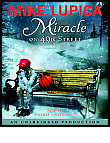
Maybe animal stories are not your “cup of tea.” Maybe you ‘d rather read sports stories. Mike Lupica, the New York Daily News columnist, has a new book out, Miracle on 49th Street. Here’s a review from his website:
Check it out from your SAS Library. ( We also have Heat and Travel Team.)Josh Cameron has it all: a World Championship ring with the Boston Celtics, an
MVP award, a clean-cut image, and the adoration of millions. What he doesn't
have is family. Until the day 12-year-old smartaleck Molly Parker confronts him
in a parking lot and claims to be his daughter — the only daughter of Jen
Parker, Josh's college sweetheart and the still the only girl he's ever loved.
Trouble is, Jen Parker died last year, and now Molly has tracked down the father
she never knew, the one her mother never wanted her to know about. Josh Cameron
cares about two things only: himself, and basketball. The last thing this
superstar wants or needs is a 12-year-old daughter. Yet this isn't just any
12-year-old. Mr. World Champion has finally met his match.
Read an excerpt
Friday, January 05, 2007
Happy New Year 2007


Well, animal lovers, we have good news for you. The library has added some terrific dog stories. Newbery Award winner Ginger Pye by Eleanor Estes is a longtime favorite for ages 8 and up. Read how the disappearance of a new puppy named Ginger and the appearance of a mysterious man in a mustard yellow hat bring excitement into the lives of the Pye children.
James Herriot's Favorite Dog Stories is really for adults but junior high students will love reading about Tricki Woo, Prince and the card above the bed, Jock top dog , Jake rides into town , Gyp only one woof , and Brandy the dustbin dog.
Tuesday, November 21, 2006
Happy Thanksgiving

In 1620, the Mayflower left Plymouth, England, bound for the new world. There were 102 passengers. 44 of them (19 men, 11 women, and 14 children) were Separatists, looking for religious freedom. The others were known to the Pilgrims as "Strangers," men who desired a new life in a new land. In spite of the hardships and deaths of so many of their group, not one person chose to return to England when the Mayflower made its return voyage five months later. I love this painting by N. C. Wyeth which shows the Pilgrims standing on the shore watching their ship leave.
For more pictures, and a wonderful retelling of the story by Robert San Souci, get the book, N.C.Wyeth's Pilgrims, from our library.